


Blog / Soft Skills Training Workshops
What to Expect from Modern Soft Skills Training Workshops?
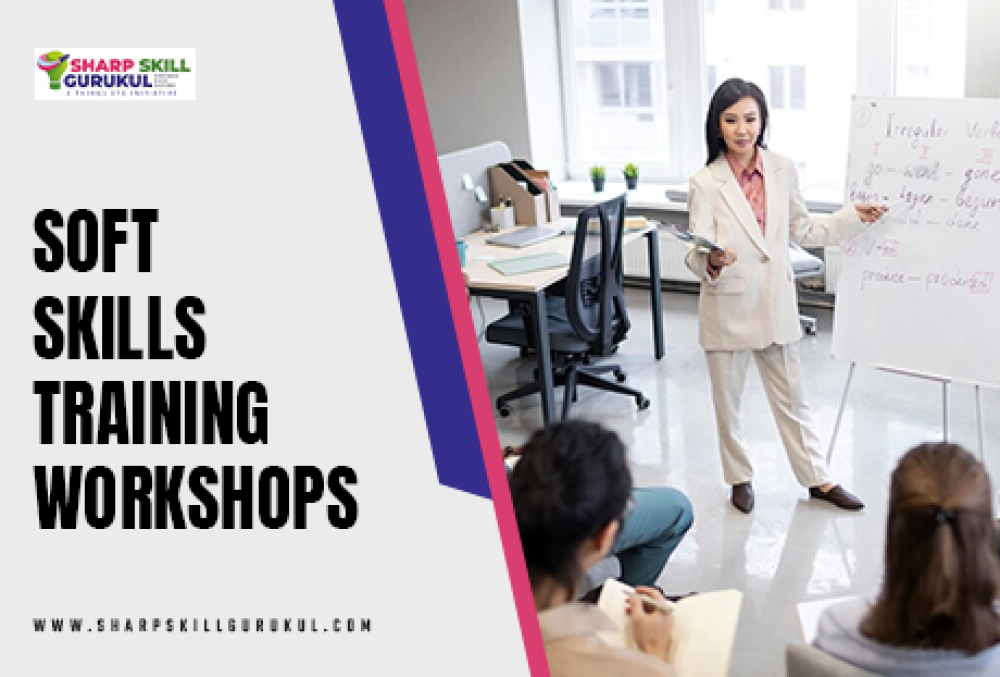
In today’s fast-moving professional world, the skills that make a difference are no longer solely technical. While subject-matter expertise lays the foundation, it’s the nuanced human competencies—communication, empathy, adaptability, collaboration—that really set individuals apart. These are what we call soft skills. A modern soft skills training workshop offers more than just a lecture; it’s a dynamic, interactive experience designed to help participants live those behaviours, not just learn about them. In this blog, we’ll explore what you should expect when you enrol in contemporary Soft Skills Training Workshops, why it matters, and how to derive the most value from it.
What Are “Soft Skills” (And Why They Matter)
When we talk about soft skills, we’re referring to interpersonal, intrapersonal and behavioural competencies — things like communication, teamwork, emotional intelligence, problem-solving and adaptability.
Why invest in them?
- The modern workplace is evolving: The rise of automation, AI and algorithm-driven work means that many routine technical tasks are shifting. What remains uniquely human are those qualities that machines find hard to replicate: empathy, complex judgment, cultural sensitivity, and creativity.
- Organisations increasingly recognise that employees with stronger soft skills are more collaborative, resilient and able to navigate change — resulting in better performance, fewer conflicts, and improved customer experiences.
- Individuals who are adept at soft skills often capture more leadership opportunities, better team roles and greater career mobility.
With this context, what does a modern soft skills training workshop look like — and what can you expect from one?
Clear Learning Objectives Aligned to Real-World Needs
You should expect the workshop to begin with a needs assessment or at least a clear articulation of what the training is aiming to achieve. Modern training design emphasises:
- Identifying specific skills gaps (eg, “Improve active listening in remote meetings”).
- Making objectives specific, measurable and relevant (e.g., participants will be able to apply a feedback model in peer coaching sessions by the end of the workshop).
- Matching training content to actual job- or life-situations — not generic “soft skills 101” but real behavioural change anchored in everyday context.
What this means for you: At the start of the workshop, you should be clear about why you’re there, what you’ll focus on, and how you’ll know you’ve improved.
Immersive, Practice-Centred Learning
One standout feature of Soft Skills Training Workshops is a shift from passive listening (lecture) to active doing:
- Role-plays, simulations, and real-time feedback: These allow participants to practise skills in safe settings before applying them in real life.
- Scenario-based activities reflecting actual workplace challenges (e.g., managing conflict, giving feedback, multicultural collaboration).
- Opportunity to fail, reflect and try again: Some programs purposely build in “calibrated failure” so learners experience what doesn’t work and learn from it.
What this means for you: Be ready to engage — speak, act, reflect. You won’t just listen to slides; you’ll turn yourself inside-out, try something, see how it felt, iterate.
Multi-Modal Delivery: Blended, Micro, Tech-Enabled
The “traditional classroom” is no longer sufficient. Modern workshops offer a mix:
- Blended learning: A combination of in-person sessions and online modules or virtual sessions ensures flexibility and scalability.
- Micro-learning elements: Short, focused modules or exercises that fit into busy schedules rather than long, drawn-out days.
- Use of technology: VR/AR simulations, adaptive learning platforms, and gamification to boost engagement and retention.
What this means for you: Expect homework, pre-work, and follow-up modules. You might have to complete an e-learning module before the live workshop, or revisit a digital activity afterwards.
Personalisation and Role-Specific Relevance
One-size-fits-all training rarely has a lasting impact. Modern workshops aim for:
- Tailoring content to participant roles (e.g., team lead vs individual contributor).
- Personal self-reflection: Participants assess their own strengths/gaps, set personal goals, and receive customised feedback.
- Linking to organisational culture and strategy: The skills taught aren’t just “nice to have” but aligned with business objectives (eg, better teamwork, improved client communication).
What this means for you: The training will ask you — What role do you play? What situations do you face? And it will help you tailor learning to your context, not just generic examples.
Ongoing Feedback, Reflection and Follow-Up
Soft skills don’t stick only because you attended a session. They stick because you practise, reflect, adjust and get feedback. A good professional skills workshop will include:
- Constructive feedback (from peers and trainers) after practice exercises.
- Opportunities for participants to reflect on what they did, what felt awkward, and what they’ll do differently next time.
- Post-workshop reinforcement: follow-up resources, coaching or micro-modules to keep momentum going.
What this means for you: Don’t expect learning to stop when the workshop ends. You’ll be asked to commit to applying something in your day job, measure it, reflect, and perhaps revisit it later.
Metrics, Outcomes, and ROI
Finally, businesses and individuals demand measurable impact. A modern workshop will:
- Use pre-/post- assessments to gauge change in confidence, behaviour, or skill level.
- Link soft skills improvements to business outcomes (e.g., improved customer satisfaction, fewer conflicts, higher team engagement).
- Provide tangible next-steps for continuing development rather than “you’ve done the workshop — go forth and prosper.”
What this means for you: Ask about how the training provider measures success, what follow-up support is provided, and how you’ll know you improved.
What To Expect (and What To Bring)
What you can expect:
- A safe, supportive learning environment where you’ll be challenged.
- Interaction, peer work, and active participation (not just sitting and listening).
- Realistic workplace scenarios you’ll work through.
- Trainer(s) who act more like facilitators/coaches than lecturers.
- Practical tools and frameworks you can apply immediately.
- Some homework, follow-up or micro-learning to embed the change.
What you should bring:
- A willingness to participate and risk being uncomfortable (that’s how change happens).
- Openness to feedback, both from the trainer and peers.
- General self-awareness about your strengths and areas you want to develop.
- Real-world examples from your own experience (so you can practise relevant behaviours).
- A commitment to apply what you’ve learnt — soft skills only stick if you use them.
Common Pitfalls to Watch Out For
Even the best workshops can fall flat if they aren’t designed or delivered well. A few caution points:
- Avoid workshops that are purely theory-heavy with minimal practice or real application. You want behavioural transformation, not just slides.
- Beware “one-off” trainings without any follow-up or reinforcement — soft skill change requires repetition and reflection.
- Check whether the training is relevant to your role/context. Generic programmes may have a lower impact.
- Evaluate the facilitator’s skill: soft skills training is as much about how the content is delivered as what is delivered.
- Make sure there’s a clear link to measurable outcomes. Otherwise, it remains “nice to have” rather than “business imperative.”
Wrapping Up
When you sign up for Soft Skills Training Workshops, you’re investing in much more than a certificate or a day off work. You’re stepping into a structured, immersive experience designed to change how you show up—in conversations, in teams, in leadership, in change situations. Expect clear objectives, active practice, personalised relevance, technological support, real feedback, and ongoing application. Bring your openness, your real-world challenges, and your intention to commit to change. The result? Stronger relationships, greater adaptability, better communication, and a professional presence that complements your technical capabilities.
If you’re ready to upgrade your soft skills and engage in this kind of transformative learning, consider exploring the offerings at Sharp Skill Gurukul — a modern training provider committed to helping learners master the interpersonal edge that drives success.